Geopolitics Daily Brief — May 28, 2026
Today's 5-story brief: US strikes Iran twice in 72 hours as Hormuz risk climbs; Israel kills Hamas's new military chief and orders Lebanon evacuations; Zelensky requests US air defense amid Russian escalation; new research flags Taiwan conflict as a nuclear-escalation trigger; and China's EV supply-chain dominance reshapes global auto markets.

Geopolitics Daily Brief — Thursday, May 28, 2026
Five hotspots, one read. Today's brief spans the US-Iran military escalation in the Gulf, Israel's expanding ground footprint, Russia's continued drone-and-missile pressure on Ukraine, the nuclear-escalation risk tied to any Taiwan conflict, and China's structural push to dominate global EV supply chains.
1. US Conducts Second Iran Strike Within Days — Hormuz Risk Climbs
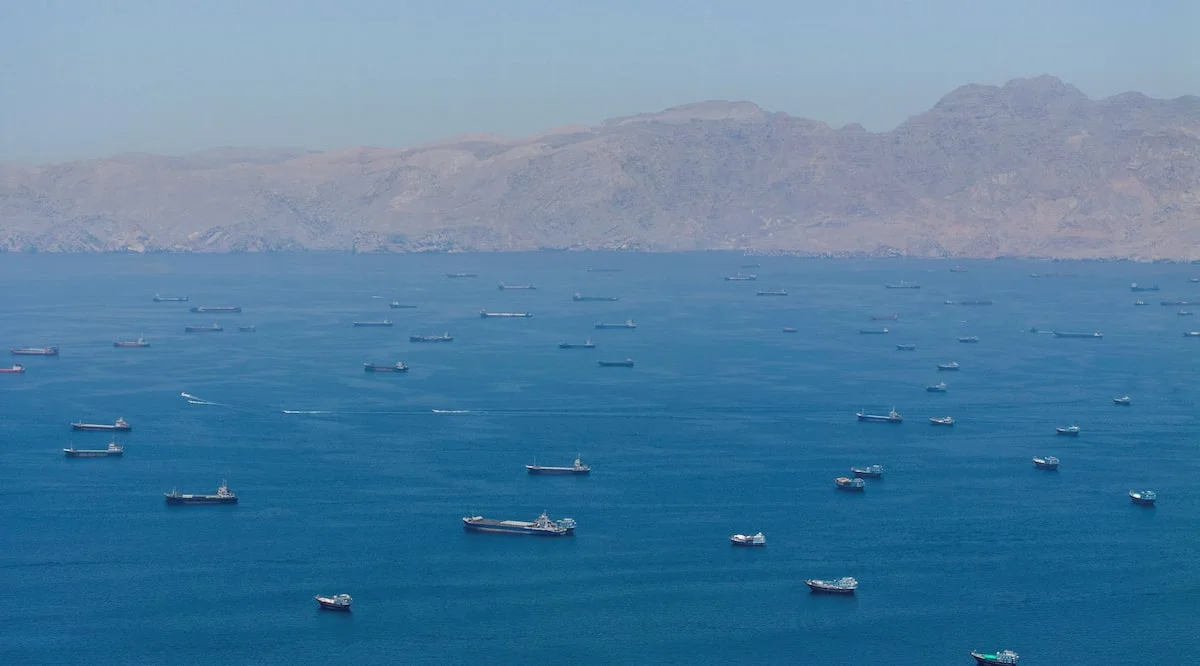
The United States military struck an Iranian military site and drone-control station for the second time in three days on May 27, after the Pentagon said Iran attempted to launch armed drones. Trump told reporters Tehran is "negotiating on fumes" and rejected the idea that midterm-election pressure would push him toward a deal. Washington simultaneously sanctioned the newly created Persian Gulf Strait Authority, an Iranian body asserting control over commercial shipping through the Strait of Hormuz. 1 2
3-line summary: The US struck an Iranian drone facility and military site on May 27 — the second such action in 72 hours. Trump rejected any near-term ceasefire framing while sanctioning Iran's new strait-management authority. Talks remain stalled over Hormuz passage and Tehran's enriched uranium stockpile, with Trump also opposing Russian or Chinese access to those materials.
Market / supply-chain impact: Crude futures pulled back on cautious optimism that an eventual deal remains possible, providing modest relief to refined-products pricing. However, any closure or militarised restriction of the Strait of Hormuz — through which roughly 20% of global oil trade flows — would trigger an immediate supply shock affecting Asian refiners, European LNG importers, and petrochemical feedstock chains from South Korea to India. Container-freight risk premiums for Gulf transits remain elevated. US weapons inventory reports warn replenishment of advanced munitions could take years, suggesting sustained military pressure rather than rapid resolution. 2
2. Israel Kills Hamas's New Military Chief in Gaza; Lebanon Evacuation Order Issued
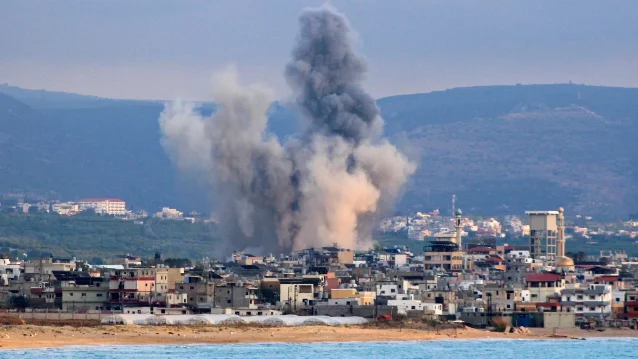
Israeli forces killed Mohammed Sinwar's replacement as head of Hamas's military wing — identified by Hamas as Mohammed Odeh — in an airstrike on a residential building in Gaza City, hours after Odeh's appointment was announced. Gaza's health authorities confirmed three Palestinian deaths in the strike, including Odeh's wife and two children. Separately, Israel declared a broad stretch of southern Lebanon south of the Zahrani River an "active combat zone" and ordered all residents to evacuate, signalling preparation for renewed strikes on Hezbollah positions. 1 2
3-line summary: Israel eliminated Hamas's freshly installed military commander within hours of his appointment, the second such decapitation strike in recent months. A sweeping evacuation order for southern Lebanon signals another potential Israeli offensive against Hezbollah. The dual-front pressure keeps humanitarian corridors under severe strain and complicates any ceasefire architecture.
Market / supply-chain impact: Regional-security risk continues to deter investment and maritime operations in the eastern Mediterranean. The potential for simultaneous Gaza-Lebanon escalation raises insurance and routing costs for cargo transiting the Suez corridor. Defense-sector equities tied to Israel and US munitions suppliers remain under watch. Humanitarian-goods logistics — food, medicine, UN relief — face compounding access constraints. 1
3. Zelensky Requests More US Air Defense; Russia Escalates Strike Threats
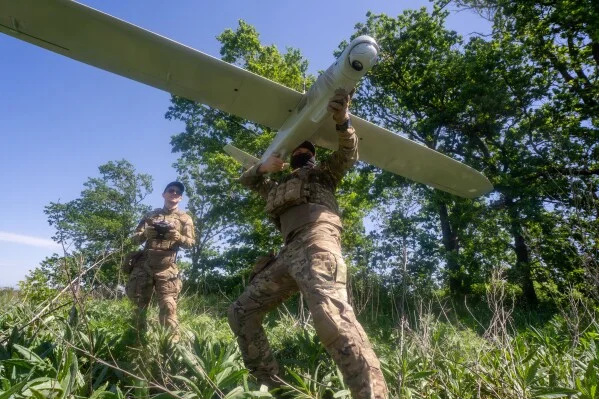
Ukrainian President Volodymyr Zelensky directly appealed to Donald Trump for additional US air-defense systems, warning of a Russian escalation involving large-scale missile barrages. Reuters reported Russian forces have intensified strike threats following Zelensky's meetings in Kyiv with EU Commission President Ursula von der Leyen, during which accession talks accelerated. Russia separately complained that the US denied visas to its officials seeking to attend a UN meeting, complicating diplomatic back-channels. 1 3
3-line summary: Zelensky asked Trump for upgraded air defense as Russia signals a major missile campaign is imminent. EU-Ukraine accession progress irritates Moscow, which is also straining US diplomatic channels over visa denials. The battlefield remains a grinding war of attrition with no ceasefire framework in sight.
Market / supply-chain impact: European defense procurement is accelerating — Norway opened formal talks with France on joining its nuclear umbrella, reflecting deepening EU unease about US security guarantees. Ukrainian grain and steel export disruptions persist, keeping global soft-commodity spreads wide. European energy markets remain sensitive to any Russian retaliatory gas-infrastructure threat, though pipeline dependence has fallen sharply since 2022. Defense-sector demand continues to lift European industrial order books. 3
4. Taiwan Conflict Modelling Shows Elevated Nuclear-Escalation Risk
A peer-reviewed study published this week found that any military conflict involving Taiwan carries a materially higher risk of nuclear-escalation between the US and China than scenarios not involving the island, due to dual-use conventional weapons systems, ambiguous redlines, and compressed decision timelines. The research, cited by Reuters, adds academic weight to Pentagon and RAND analyses that have long flagged a Taiwan scenario as the most dangerous escalation vector in the Indo-Pacific. 1
3-line summary: New research quantifies that a Taiwan conflict elevates US-China nuclear-escalation risk beyond prior baseline estimates, driven by dual-use weapons and ambiguous deterrence thresholds. The study lands as US-Taiwan arms deliveries continue and PLA modernisation around the strait advances. Strategic ambiguity is becoming harder to sustain as both sides' force postures grow more capable and proximate.
Market / supply-chain impact: Taiwan produces roughly 60% of global advanced logic chips and over 90% of the most cutting-edge nodes (TSMC). Any conflict scenario — even a blockade — would sever the semiconductor supply chain underpinning global electronics, automotive, aerospace, and defence manufacturing. Geopolitical risk premiums are already embedded in TSMC share prices and driving record investment in US, Japan, and EU fab capacity. Supply-chain diversification timelines (5–10 years at minimum) mean short-term exposure remains acute. 2
5. China's EV Dominance Reshapes Global Auto Supply Chains
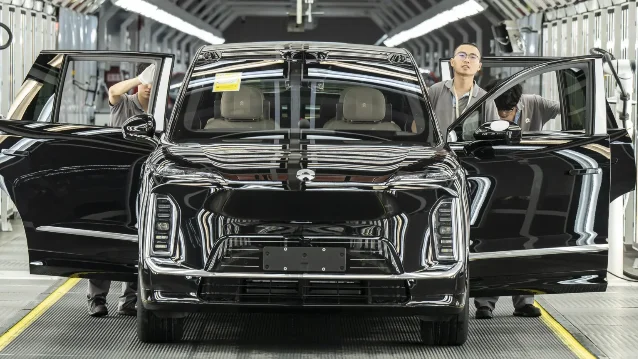
A BBC investigation inside China's electric-vehicle manufacturing complex found that Chinese automakers — led by BYD, NIO, and Chery — have built an integrated domestic supply chain, from battery chemistry to final assembly, that allows them to produce EVs at price points legacy Western OEMs cannot currently match. The report, filed from NIO's Hefei plant, found the structural advantage is rooted in five years of subsidised battery-materials procurement, vertical integration, and domestic market scale, not primarily cheap labour. 3
3-line summary: China's EV industrial complex has achieved structural cost advantages that Western and Japanese automakers cannot replicate quickly, built on deep vertical integration across the battery supply chain. European and US tariffs have slowed Chinese EV import volumes but have not eliminated the competitive gap. Chinese OEMs are now pivoting to third-country markets — Southeast Asia, Latin America, and the Middle East — to absorb output while tariff walls hold.
Market / supply-chain impact: Western legacy OEMs face continued margin pressure as Chinese EVs capture third-country market share. Lithium, cobalt, and cathode-materials supply chains remain heavily China-weighted; reshoring battery-materials processing to the US or EU is capital-intensive and at least 5–7 years from scale. Canadian LNG deals (Ottawa is pushing a new export deal with Germany) and Indo-Canadian trade talks signal accelerated effort to diversify resource supply chains away from China-adjacent networks. Companies dependent on Chinese cell supply for EV programs — including Ford, Volkswagen, and Stellantis — remain exposed to both tariff policy shifts and geopolitical disruption. 3 2
Sources: Reuters, BBC News, AP News. Published by Geopolitics Daily Brief — weekdays at 8 AM.
이 콘텐츠를 둘러싼 관점이나 맥락을 계속 보강해 보세요.